being a grown up
the super ego prevails
heartbreak of the id
Showing posts with label introspective. Show all posts
Showing posts with label introspective. Show all posts
Friday, May 15, 2020

Friday, June 22, 2018
Little Things With Great Love
"God does not call us all to great things, but calls us to do small things with great love."
Trying to soothe the chronic feeling of inadequacy with the balm of reminding myself that I am enough. I am reminded that it is not about how I want to fashion myself and serve my own ambition, but it is truly that I am His work, and I am fashioned according to his exact purposes.-Mother Teresa
Today, conversation turned to a hawker who worked from 6am to 10pm frying char kway teow and happily drove his Mercedes to work every day. Then, to a multi-millionaire businessman who, in university, made many friends, enjoyed life, and was mostly having his homework done for him by his more intellectual friends. Then, to someone who loved fiddling with watches, and now consults with top watchmaking companies.
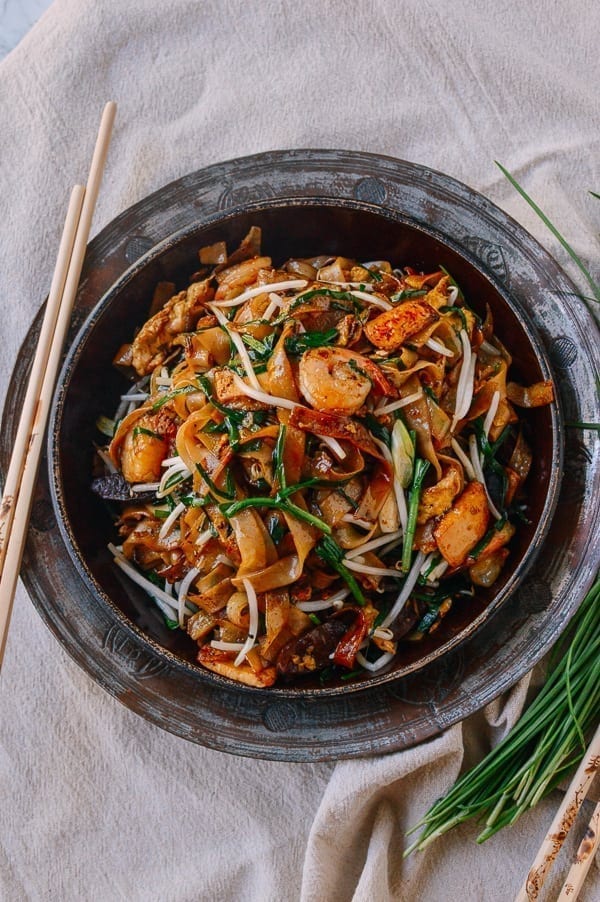
Char kway teow
One capitalised on his culinary skills and became a hawker. Even though he may not be widely acknowledged with a Michelin star, the people who know of him appreciate his work, and he is the local's secret.
The other capitalised on his social intelligence, in working through the system to achieve their own ends, and became a businessman. He followed his interest in people, in talking to others, in managing money and making profit. He might not be as famous and high-profile as Bill Gates, but I doubt that was what he wanted.
All three pursued their passion. Did they know what they wanted? Yet each person created space in their lives to keep doing what they were passionate about.
Every moment of our day, every opportunity that comes our way, we are equipped with the sum of our experiences, skills, temperament and character, and we are leveraging this to move forward. Formally or informally, we are carving our own training pathways, and creating our own opportunities.
Too introverted. Too weak. Bad sleeper. Overthinking again. A litany of deprecation that never ends. I realise that everything is relative, and these weaknesses don't just mean that I am not cut out for something. It means I am better cut out for something else. When it comes to what I want, I would be a fool to think I know what that is.
What I do know is what I am passionate about. God. Loved ones. Writing. Dance. Health.
I realise that His grace is sufficient for me. I am reminded that all I can do is do what I can, with as much love as I can muster. Appreciate what I have. Make the most of the opportunities that lie before me.
I look at the love that I have, and the love that I have not, and lay it all before the one who loves me more than I can conceive of love.
"Take my yoke upon you and learn from me, for I am gentle and humble in heart, and you will find rest for your souls. For my yoke is easy and my burden is light.”
-Matt 11:29-30 NIV
Sunday, January 28, 2018
Non-negotiables
Last year, I established some clear values and clarified some defective thought patterns. My perfectionism, in particular. I realise now that perfection isn't about the finished product, or beating yourself up about failure.
Rather, it's a commitment. A commitment to disciplining yourself to do what you value, and embrace and take joy in repetition. Repetition is everything. Practise makes perfect.
To fail means you are challenging yourself. I used to avoid facing up to my failures, because I felt ashamed of not living up to my standards.
But standards are subjective. They are a perception we create for ourselves, to strive towards. As I grow to understand my practise of something, be it dance, writing, or being a a better Christian, I find myself constantly reevaluating and redefining my perception of perfect.
The real perfect, the real product is the process. The process of repetition and practice.
I embrace failure now, because I know that it reflects taking a risk. Failure, not success, enables you to learn and grow.
Over the next couple of years, I shall strive to establish habits. Non-negotiable disciplines and practises that I will retain for the rest of my life.
Some surprising non-negotiables emerged over the past couple of years, and they include needing to dance and write several times a week.
Last year, I experimented. I realised that five basics are essential.
The first four are meditation/prayer, adequate sleep, exercise, and eating.
I need a lot of exercise; in the ballpark of a minimum of ten hours a week. I need an average of seven and a half hours of sleep, and preferably earlier in the night and earlier in the morning, probably waking up around seven every day. To that end, I try to switch off screens after eleven, although sometimes important communication with family or friends trumps that desire.
I endeavour to eat slowly and mindfully, and luxuriate in conversation.
I avoid sugar.
I used to love all things chocolate and ice-cream, but I realised that I am addicted to sugar. The penny dropped when I ate almost an entire packet of cookies one night, and woke up the next day, head full of what I needed to do that day, and could not bring myself out of bed. Then the thought of a chunky cookie dunked in the foam of a cappuccino came to mind, and suddenly I was out of bed like a shot.
Last year, I attempted to quit sugar. I tried cutting it down, but it usually ended in a rebound day. So I tried abstinence, the way alcoholics do.
That worked.
It was quite possibly the best change, but also the hardest change I made. The first few days I was tired and craved it. I drank cider and bubble tea, which didn't count. But over time, I realised that my energy, cognitive clarity, moods and impulse control had drastically improved, and my belly fat had reduced.
The past quarter, I experimented with relaxing the abstinence in view of increased travel, Christmas and the social nature of having dessert and sweet things. But in those two months, I gained weight, developed acne, became more lethargic, moody and impulsive. I know that just as alcoholics must avoid alcohol, I too must avoid sugar.
The final is the most important constant of all, which is being able to let go of everything, and prioritise relationships. Family. The family I have by blood, the family I have in Christ, and the family I will have by marriage. The real center of my life.
Rather, it's a commitment. A commitment to disciplining yourself to do what you value, and embrace and take joy in repetition. Repetition is everything. Practise makes perfect.
To fail means you are challenging yourself. I used to avoid facing up to my failures, because I felt ashamed of not living up to my standards.
But standards are subjective. They are a perception we create for ourselves, to strive towards. As I grow to understand my practise of something, be it dance, writing, or being a a better Christian, I find myself constantly reevaluating and redefining my perception of perfect.
The real perfect, the real product is the process. The process of repetition and practice.
I embrace failure now, because I know that it reflects taking a risk. Failure, not success, enables you to learn and grow.
Over the next couple of years, I shall strive to establish habits. Non-negotiable disciplines and practises that I will retain for the rest of my life.
Some surprising non-negotiables emerged over the past couple of years, and they include needing to dance and write several times a week.
Last year, I experimented. I realised that five basics are essential.
The first four are meditation/prayer, adequate sleep, exercise, and eating.
I need a lot of exercise; in the ballpark of a minimum of ten hours a week. I need an average of seven and a half hours of sleep, and preferably earlier in the night and earlier in the morning, probably waking up around seven every day. To that end, I try to switch off screens after eleven, although sometimes important communication with family or friends trumps that desire.
I endeavour to eat slowly and mindfully, and luxuriate in conversation.
I avoid sugar.
I used to love all things chocolate and ice-cream, but I realised that I am addicted to sugar. The penny dropped when I ate almost an entire packet of cookies one night, and woke up the next day, head full of what I needed to do that day, and could not bring myself out of bed. Then the thought of a chunky cookie dunked in the foam of a cappuccino came to mind, and suddenly I was out of bed like a shot.
Last year, I attempted to quit sugar. I tried cutting it down, but it usually ended in a rebound day. So I tried abstinence, the way alcoholics do.
That worked.
It was quite possibly the best change, but also the hardest change I made. The first few days I was tired and craved it. I drank cider and bubble tea, which didn't count. But over time, I realised that my energy, cognitive clarity, moods and impulse control had drastically improved, and my belly fat had reduced.
The past quarter, I experimented with relaxing the abstinence in view of increased travel, Christmas and the social nature of having dessert and sweet things. But in those two months, I gained weight, developed acne, became more lethargic, moody and impulsive. I know that just as alcoholics must avoid alcohol, I too must avoid sugar.
The final is the most important constant of all, which is being able to let go of everything, and prioritise relationships. Family. The family I have by blood, the family I have in Christ, and the family I will have by marriage. The real center of my life.
Saturday, April 1, 2017
Still waters run deep my dear
A friend of mine and I were chatting about the tension between wanting and being happy, and my tongue stumbled upon the sentence - happiness is not found by doing something in order to be happy, but in being happy doing something. I realise this marked a culmination of a 12 year reflection on happiness, which can be found here: 1 2 3
It's surreal to realise that is the fabric of reality - the things you realise come full circle in the never-ending cycles of being.
Happiness is not found by doing something in order to be happy, but in being happy doing something. But doing what? Whilst there is happiness in simply being in the moment, there is more to happiness and joy - fundamentally, it comes from connectedness and being of value to others. A sense of usefulness and purpose.
Sometimes that purpose seems to come the pursuit of something; a place of wanting. Perfection, for example (arguably a human construct that does not really exist, but don't get me started on that). For me at least, being drawn to all-consuming pursuits like dance or medicine perhaps stems from an unfulfilled sense of human connection. In a way, it is a form of escape from that sadness - that sense of disconnection or isolation. But no matter how good you are, it never feels good enough, or like you've worked hard enough. The very escape and reward becomes a kind of punishment as you feel inadequacy - no matter how hard you try, it is never good enough for you, and you realise that you haven't actually resolved the underlying sense of disconnection, but that it has come out as inadequacy of another sort.
The pursuit of a relationship as a means to that end doesn't work either. Whilst a seemingly straightforward solution to the problem of human disconnect, this pursuit is actually damaging to the relationship in question if the entirety of the weight of your need for connection now rests on a single person. It generally ends up in neuroticism like 'Oh my God, why hasn't s/he texted back when it says s/he is 'online' or has 'read' the text', and a sense of disappointment when you realise that the relationship or person has not lived up to your expectation of what connectedness should be. Relationships are not a solution, or a 'magic bullet' cure to loneliness. If you think they are, then in the words of Sia, all your bullets ricochet. To love isn't about fulfilling your own need.
Happiness cannot be pursued. In a related vein of philosophical musings, you can't always get what you want, and getting what you think you want is often an exercise in realising that what you think you want isn't actually what you are really lacking. To paraphrase the words of Anna Pavlova, happiness cannot be chased, but like a butterfly, will come to rest gently on your shoulder.
There is happiness and satisfaction in being fully present in the moment that you are in, not being distracted from it by the past, or the future, or your own wants and desires. Whilst for some people that amounts to the New Age mindfulness of simply being, meditation and the like, for me it finds its best absolution in connection and belief in God. The belief that He loves us, and that He has made it this way, and is working in our lives. That the situations we are in, however they look to our human eyes, have value. Weak or strong, rich or poor. The sick inspire us with their fighting spirit, and the well take joy in caring for those in need. For it is through our individual circumstances that we are uniquely positioned to connect to others, and to mean something to other people. There can be many dancers, or waitresses, or admin officers. But no one else is truly in the same position, and no one else can replace us. It is out of this that we find purpose. And it is through the ongoing fulfilment of that purpose that joy arises. Joy is that sense of purpose that is fulfilled by an other-person centeredness in human connection. Joy looks outwards and runs deeper than a feeling of happiness.
Love, happiness, joy. All inextricably intertwined and culminating in moments of bliss, through a very good conversation with a friend.
It's surreal to realise that is the fabric of reality - the things you realise come full circle in the never-ending cycles of being.
Happiness is not found by doing something in order to be happy, but in being happy doing something. But doing what? Whilst there is happiness in simply being in the moment, there is more to happiness and joy - fundamentally, it comes from connectedness and being of value to others. A sense of usefulness and purpose.
Sometimes that purpose seems to come the pursuit of something; a place of wanting. Perfection, for example (arguably a human construct that does not really exist, but don't get me started on that). For me at least, being drawn to all-consuming pursuits like dance or medicine perhaps stems from an unfulfilled sense of human connection. In a way, it is a form of escape from that sadness - that sense of disconnection or isolation. But no matter how good you are, it never feels good enough, or like you've worked hard enough. The very escape and reward becomes a kind of punishment as you feel inadequacy - no matter how hard you try, it is never good enough for you, and you realise that you haven't actually resolved the underlying sense of disconnection, but that it has come out as inadequacy of another sort.
The pursuit of a relationship as a means to that end doesn't work either. Whilst a seemingly straightforward solution to the problem of human disconnect, this pursuit is actually damaging to the relationship in question if the entirety of the weight of your need for connection now rests on a single person. It generally ends up in neuroticism like 'Oh my God, why hasn't s/he texted back when it says s/he is 'online' or has 'read' the text', and a sense of disappointment when you realise that the relationship or person has not lived up to your expectation of what connectedness should be. Relationships are not a solution, or a 'magic bullet' cure to loneliness. If you think they are, then in the words of Sia, all your bullets ricochet. To love isn't about fulfilling your own need.
Happiness cannot be pursued. In a related vein of philosophical musings, you can't always get what you want, and getting what you think you want is often an exercise in realising that what you think you want isn't actually what you are really lacking. To paraphrase the words of Anna Pavlova, happiness cannot be chased, but like a butterfly, will come to rest gently on your shoulder.
There is happiness and satisfaction in being fully present in the moment that you are in, not being distracted from it by the past, or the future, or your own wants and desires. Whilst for some people that amounts to the New Age mindfulness of simply being, meditation and the like, for me it finds its best absolution in connection and belief in God. The belief that He loves us, and that He has made it this way, and is working in our lives. That the situations we are in, however they look to our human eyes, have value. Weak or strong, rich or poor. The sick inspire us with their fighting spirit, and the well take joy in caring for those in need. For it is through our individual circumstances that we are uniquely positioned to connect to others, and to mean something to other people. There can be many dancers, or waitresses, or admin officers. But no one else is truly in the same position, and no one else can replace us. It is out of this that we find purpose. And it is through the ongoing fulfilment of that purpose that joy arises. Joy is that sense of purpose that is fulfilled by an other-person centeredness in human connection. Joy looks outwards and runs deeper than a feeling of happiness.
Love, happiness, joy. All inextricably intertwined and culminating in moments of bliss, through a very good conversation with a friend.
Friday, September 27, 2013
Good with words
I love listening. I used to think that listening was more important than talking, that I talked to get people in a position so I could listen to them. With a certain kind of arrogance, I used to think that being good with words is knowing when silence, when listening, is more important than what you have to say. Being good with words, is looking through the unique turns of phrase or accents that each person has, and being able to understand what they are saying, and empathise with what they actually mean.
With time, I realised that the obvious was true: being good with language wasn't just about listening, but about talking. I wished I had a more engaging charisma, a more appealing timbre and accent - to be the kind of person who actually could engage people with my insightful words of comfort, or witty repartee, or dramatic tales, or effortless small talk. Instead, I'm the kind of awkward that can't even finish the punchline to my own joke before cracking up.
I realise now that being good with language just isn't about having the widest vocabulary or the most lyrical turn of phrase. It isn't about having an appealing vocal timbre, or enunciating all your ending consonants. Being good with words is knowing what to say in love, just as the good book says (1 Cor 13:1). Being good with words is knowing what to say to make someone else understanding you, to get on board with you. You might not have to use big words or fancy high-falutin' phrases, and in fact you most probably won't have to. What you do need to do is know the other person well enough. You need to know what words to say to so they understand, not your words, but your meaning.
With time, and as it turns out, with almost with no bearing on language at all, I realise that in the best relationships, being understood is just as valuable, and important as understanding. Yet with sadness, I realise that may never exist.
With time, I realised that the obvious was true: being good with language wasn't just about listening, but about talking. I wished I had a more engaging charisma, a more appealing timbre and accent - to be the kind of person who actually could engage people with my insightful words of comfort, or witty repartee, or dramatic tales, or effortless small talk. Instead, I'm the kind of awkward that can't even finish the punchline to my own joke before cracking up.
I realise now that being good with language just isn't about having the widest vocabulary or the most lyrical turn of phrase. It isn't about having an appealing vocal timbre, or enunciating all your ending consonants. Being good with words is knowing what to say in love, just as the good book says (1 Cor 13:1). Being good with words is knowing what to say to make someone else understanding you, to get on board with you. You might not have to use big words or fancy high-falutin' phrases, and in fact you most probably won't have to. What you do need to do is know the other person well enough. You need to know what words to say to so they understand, not your words, but your meaning.
With time, and as it turns out, with almost with no bearing on language at all, I realise that in the best relationships, being understood is just as valuable, and important as understanding. Yet with sadness, I realise that may never exist.
Sunday, November 11, 2012
Song of solitude
(A crooner)
Those that I have loved
have never loved me back -
If you love me, let me go,
they say. In old romantic movies
people always come back
in the end. Out in real life
no one ever comes back.
Silence never leaves me
Solitude's breath is ever on my neck
Smiles and laughter deceive me
into thinking there is nothing that I lack.
So I sit in swells of solitude
as the current says goodbye.
each of us marooned
in our own lot
in a Thousand Islands -
in constructs of wood,
encased in stone,
or seated bopping up and down
on a dinghy, one of many
festooning the shore.
Those that I have loved
have never loved me back
in quite the same way.
Better to have lost in love
than never to have loved at all
they say, but they don't say
both leave you, leave you lonely.
Silence never leaves me
Solitude's breath is ever on my neck
Smiles and laughter deceive me not -
for the something that I lack.
Those that I have loved
have never loved me back -
If you love me, let me go,
they say. In old romantic movies
people always come back
in the end. Out in real life
no one ever comes back.
Silence never leaves me
Solitude's breath is ever on my neck
Smiles and laughter deceive me
into thinking there is nothing that I lack.
 |
| Thousand Islands |
So I sit in swells of solitude
as the current says goodbye.
each of us marooned
in our own lot
in a Thousand Islands -
in constructs of wood,
encased in stone,
or seated bopping up and down
on a dinghy, one of many
festooning the shore.
Those that I have loved
have never loved me back
in quite the same way.
Better to have lost in love
than never to have loved at all
they say, but they don't say
both leave you, leave you lonely.
Silence never leaves me
Solitude's breath is ever on my neck
Smiles and laughter deceive me not -
for the something that I lack.
Saturday, August 28, 2010
Pins and needles
[SPOILER ALERT]
 today in which an adopted Chinese girl sets out in search of her birth parents, and ends up gravely ill.
In the end, it is discovered that her parents placed pins into her brain in an attempted murder, because China had a one-child policy, and the parents wanted a boy.
When her adoptive parents hear the diagnosis, they request that she not be told that her parents attempted to kill her because they didn't want her. They understand her to be emotionally fragile and fear that she may react badly, especially as she had history of alcoholism and smoking. However, the doctor explains that the pins pierce through specific areas of her brain, including her addiction centre (I'm guessing the VTA / some part of her mesolimbic system).
"She may not be as fragile as you think," the doctor says.
"We know our daughter," they respond.
He says, "It's not her fault, she's not who you think she is."
[/SPOILER ALERT]
How much of how we behave is really comprehensible to the people around us? It's so easy to look at someone who's a drug addict, or who's got problems stealing, or with violence, and to say, "I'm not like that. How can they go about ruining their life like that..." It's so easy to judge others, and delineate them as different from ourselves.
But do we really understand exactly what's going on in their lives, in their minds? How much of what they think and do is really of their own volition? If you were placed in that situation, with that brain chemistry, can you say with conviction that you would choose to not be a druggie?
In fact, when you stop and thinking about it, how much of what we think is in our conscious control? That girl had physical, metal pins in her head that affected her and caused her to behave differently than what is biologically considered to be normal. But we have pins too. Maybe they don't seem to be there in a literal sense, but our genes code for our neurocircuitry, and much of our behaviour is learnt and imprinted on us by our environments. Although it may be slippery slope to say that free will does not exist, perhaps it is a less evenly free playing field than we imagine it to be for the other person.
It seems strange to think it, but I think what Sara Crewe, a privileged heiress, says about Becky, a poor servant girl in the same boarding school, about sums it up:
"Why," she said, "we are just the same--I am only a little girl like you. It's just an accident that I am not you, and you are not me!"
- A Little PrincessIt is a scary thought, perhaps. Especially when we pause to consider that we are not so very different from the people we disdain or dislike, as much as we would like to believe it. In reality, there is perhaps little besides God's grace, or "accident", that separates one person's personality or fortune from another., Chapter 5, Frances Hodgson Burnett
But ultimately, I think these thoughts point us in quite a refreshing direction in attempting to relate to other people: understanding, respect and love. Even of the less than loveable.
Thursday, July 1, 2010
Appearances
We're told that appearances don't matter. We shouldn't be fussed about them - that's vanity.
The thing is, all we can see of other people is their appearance. Even when you say you know someone really well, all you can really say is that you've seen their various appearances over either a long period of time or in varied circumstances, such that it gives the semblance of knowing them well.
We don't, and we can't present anything less than an appearance, to well, anyone.
Except perhaps God.
Friday, February 26, 2010
Night-time conversational musings, Part I
I was talking to a friend the other day about what it means to be introverted/extroverted. We were speculating the nature of this strange trait. Is it an attitude, a characteristic, a preference?
Today, I realised that one way to look at introversion/extroversion is as a mode of fulfillment.
There are two ways in which a human can be fulfilled. One is through relationships with others, the other is through self-fulfillment. In a venn diagram, the overlapping intersection would be, I suppose, odd things like relations to entities like God, music and other abstractions.
Being fulfilled through relationships with others involves surrendering to the feelings you get when you are in the company of others. When you're devoted to loving someone else, whether it's in the form of friendship, filial duty or the (urgh, dreaded) romance, the pleasure of their company, and the atmosphere that surrounds you frees you from a sense of emptiness. To a certain extent, when you're caught up in relating to other people, you don't really have time to be caught up in your own problems, or feel dissatisfied with yourself. Even when employed in a negative way, hatred of someone can be so all-consuming that you can lose sight of your own problems. I speculate that extroverts would tend to find this way of finding fulfillment more natural and possibly more satisfying.
On the other hand, being fulfilled through setting your own goals involves being single-minded and focused. Although you may not be able to spend as much time enjoying the company of others, you certainly don't waste as much time (ever notice how spending time with others tends to make you waste so much time, pretty often doing nothing much other than waiting around?). For me, one of the consolations of a more self-directed lifestyle is that it is, to a certain extent, less of a risky venture in terms of end pay-off. I can always say to myself, 'Well, even if I haven't had much time with friends this time round, at least I've accomplished such and such.'
Thursday, September 17, 2009
It's the heart that matters most
[Warning: as you may have discerned from the title, this will be a cliched and gushy, probably preachy post.]
But they do. We all do. The thing that binds us isn't that we're high academic achievers, or that we're competent, or that we've an all-consuming interest in what we do.
It's that we've got heart. Underneath our exteriors, whether hard and clam-like, or soft and welcoming, we feel for others. When we see another human being suffering, some part of us is fundamentally driven to do something, unselfish enough to care about it, and to want to make a difference.
If you're in the profession for anything else - whether it's the so-called glory or prestige, or the financial stability, or even for the intellectual gratification, you're bound to be disappointed. There's little real glory to be had - every other course from Politics to Culinary Skills, has its fair share of high-fliers. As for financial stability, there are easier ways to get that. You will spend a long time awaiting intellectual gratification, if that's what you're hoping for. Frustration is more likely, with all the loose ends and incomplete science.
The only thing that I can think of that makes us want to go on in this race is that we care. We care about our patients. We care about being good doctors. We care about each other.
Saturday, August 1, 2009
As time passes
Emptiness pervades
as movement carries forth space-
time residuum.
What is matter
but a concept of movement
that slow eyes pick up?
Where is displacement?
Impossible concept if
there is no stillness.
Yet stillness exists
only hypothetically -
really think on it.
as movement carries forth space-
time residuum.
What is matter
but a concept of movement
that slow eyes pick up?
Where is displacement?
Impossible concept if
there is no stillness.
Yet stillness exists
only hypothetically -
really think on it.
Tuesday, May 19, 2009
Exhortation to love
The other day I saw fliers being pasted all around the suburb I frequent in Sydney. They were for someone who had gone missing. As much as it was sad that someone had indeed gone missing, and the circumstances behind it must be quite unfortunate, it was obvious that the person who had gone missing was loved and missed.
The same cannot be said for everyone though, and I cannot help but reflect that it is possibly the worst thing in the world to be unloved and uncared for, to be shunned by others, to feel alone and isolated. I think I would rather be that person who had gone missing, than someone whose existence people know of and care little for.
Of course, with my exercise-induced endorphin high, I couldn't help but put a positive spin to the melancholy thought. I realised then that love really does cover everything. You can be in the worst situation - suffering, diseased, in dire circumstances, but if you are loved and in a supporting environment, somehow it seems more bearable. Conversely, you can have everything, yet have not love, and the world becomes an empty and torturous place indeed.
If you believe in God, the benevolent love and wisdom of a creator, can help us through troubling times. We might possibly comfort ourselves in the knowledge that the shit that happens to us, happens for a purpose. Perhaps, we may be strengthened by the experience, and some good things are bound to come of the bad.
But more than this, we creatures of such a creator have in us the capacity to love each other, in a tangible way, for a tangible physical realm. So every opportunity we get, let us be there for one another, and love one another, so our sorrows might seem that little bit easier to bear.
As an aside, in Christianity, the foremost command after loving God is loving others. Cognitively, this for me is what makes Christianity such a valid fundamental belief. Jesus Christ realising God's love for us by dying for us divinely substantiates the Christian dogma.
Friday, January 9, 2009
With a couple of good friends coming back from overseas, I had the chance for a few heart-to-heart sessions. One thing that bugs me after I walk away from them is the odd feeling that I might not have been telling the truth. The thing about discussing one's feelings is that they're so apt to change and so hard to pinpoint that you can find yourself agreeing or claiming something that seems true at the time, but in retrospect wouldn't be something you would actually think of as true on your own. Truth is so finicky sometimes.
In the process of teasing words out of feelings and thoughts, you can manufacture sentiments that don't actually exist or find yourself saying things about people (whether yourself or others) that you might not otherwise say. For lack of a better way to say this is an expression I frequently find myself using to express half-baked thoughts in a rather skewed manner. At best, what you end up saying contains connotations you didn't at first intend. Whether it's because of a subconscious imperative to impress the listener, or a rather conscious attempt to skirt issues you feel are taboo, you can end up saying things that somehow grow progressively further from the truth as you keep up the discussion.
The worst part of it is, you may not even realise it. You think what you're saying is true, until several days, or weeks, or months later, when the issue comes up again, and you find yourself saying something completely different to someone else.
The world of emotions and opinions seems to slide between truth and untruth as (for lack of a less cliched to say this) water of a duck's back (from one metaphorical duck to another, I suppose). So much so that I often find myself questioning the value of the evaluation of truthfulness.
I guess I'm just not a very honest person. Then again, maybe I'm not dishonest. Just paradoxical. Periodically paradoxical.
In the process of teasing words out of feelings and thoughts, you can manufacture sentiments that don't actually exist or find yourself saying things about people (whether yourself or others) that you might not otherwise say. For lack of a better way to say this is an expression I frequently find myself using to express half-baked thoughts in a rather skewed manner. At best, what you end up saying contains connotations you didn't at first intend. Whether it's because of a subconscious imperative to impress the listener, or a rather conscious attempt to skirt issues you feel are taboo, you can end up saying things that somehow grow progressively further from the truth as you keep up the discussion.
The worst part of it is, you may not even realise it. You think what you're saying is true, until several days, or weeks, or months later, when the issue comes up again, and you find yourself saying something completely different to someone else.
The world of emotions and opinions seems to slide between truth and untruth as (for lack of a less cliched to say this) water of a duck's back (from one metaphorical duck to another, I suppose). So much so that I often find myself questioning the value of the evaluation of truthfulness.
I guess I'm just not a very honest person. Then again, maybe I'm not dishonest. Just paradoxical. Periodically paradoxical.
Monday, January 5, 2009
Unending beginning
I feel like I've hurtled into the new year the way a speeding car goes round a blind corner. One (figurative) minute it was 2008, the next it was '09. Perhaps it was because the new year started on a Thursday. Not properly the beginning of a week, or the end, but the day that rushes into the weekend.
Whatever the case, somehow I now find myself a few days into 2009 not quite knowing what hit me and trying to regain my bearings after a bevvy of church and social activities, a wedding, and a concert. Phew! But all the same, if the rest of this year follows the same way, I think I shall quite enjoy the (rather surreal) experience of scenery rushing by me. The only thing is, I fear I have already broken my resolutions before I've even had a chance to take a breather and make them properly.
Perhaps it's because of the manner in which I have hurtled into this year, or the fact that I'm aging significantly, but I no longer feel the sense of rejuvenating new-ness that I used to when a new year heralded. Although theoretically it should be a year of changes and sparkling potential, things of the past remain like the stubborn stains that ingrain themselves onto the insides of mugs. Tea stains, coffee stains, and soup stains; I've all but given up trying to rinse them away. The same old struggles continue to plague me, and the same bittersweet aftertaste remains from drinking of it. My cup is my cup, and I'm not really averse to it being a bit old after a couple decades use.
All in all, I feel older and more tired, yet stronger and more wiry. Somewhere between cynicism and naivete, self-consciousness and laissez faire. Not quite ready for novelty, but not opposed to it either, insides still churning from the sharp direction change as I've rounded the corner of 2008.
Whatever the case, somehow I now find myself a few days into 2009 not quite knowing what hit me and trying to regain my bearings after a bevvy of church and social activities, a wedding, and a concert. Phew! But all the same, if the rest of this year follows the same way, I think I shall quite enjoy the (rather surreal) experience of scenery rushing by me. The only thing is, I fear I have already broken my resolutions before I've even had a chance to take a breather and make them properly.
Perhaps it's because of the manner in which I have hurtled into this year, or the fact that I'm aging significantly, but I no longer feel the sense of rejuvenating new-ness that I used to when a new year heralded. Although theoretically it should be a year of changes and sparkling potential, things of the past remain like the stubborn stains that ingrain themselves onto the insides of mugs. Tea stains, coffee stains, and soup stains; I've all but given up trying to rinse them away. The same old struggles continue to plague me, and the same bittersweet aftertaste remains from drinking of it. My cup is my cup, and I'm not really averse to it being a bit old after a couple decades use.
All in all, I feel older and more tired, yet stronger and more wiry. Somewhere between cynicism and naivete, self-consciousness and laissez faire. Not quite ready for novelty, but not opposed to it either, insides still churning from the sharp direction change as I've rounded the corner of 2008.
Wednesday, November 19, 2008
Why doesn't time listen when I say stop?
This year has passed so quickly - it's already the last six weeks before the next year begins. Already I feel the year looming ahead, rising like mist after the rain. It's full of potential, like all unused things - a fresh sheet of paper, a new pair of shoes, the beginning part of a relationship - it has that special magic. A promise, perhaps, of something good on the horizon.
It's naive and cliched perhaps, especially when all nice, clean new things eventually get stained and dirty with use. Mistakes are made, and cannot be erased.
Perhaps it's tempting fate to say this, but I don't think I made too many mistakes (edit: I mean major mistakes, the kind that make you go 'What was I thinking?' when you think back on them. Not the making-funny-faces-in-lift-mirrors-when-the-door-opens sort) this year. I think I was spending to much time dwelling on the mistakes of the past, trying to recoup my losses, I suppose.
In the last leg of this transitory phase, before I leave on my jet plane, I want to experience something I've never experienced before. Too bad it's too late to plan something like climbing a mountain or something.
Maybe next year.
It's naive and cliched perhaps, especially when all nice, clean new things eventually get stained and dirty with use. Mistakes are made, and cannot be erased.
Perhaps it's tempting fate to say this, but I don't think I made too many mistakes (edit: I mean major mistakes, the kind that make you go 'What was I thinking?' when you think back on them. Not the making-funny-faces-in-lift-mirrors-when-the-door-opens sort) this year. I think I was spending to much time dwelling on the mistakes of the past, trying to recoup my losses, I suppose.
In the last leg of this transitory phase, before I leave on my jet plane, I want to experience something I've never experienced before. Too bad it's too late to plan something like climbing a mountain or something.
Maybe next year.
Sunday, November 2, 2008
You need fillings if you have tooth decay.
Cavities are made to be filled. At least, I know my buccal cavity is. It's the way God made us - that's why we have a God-shaped hole inside us.
Sometimes it seems like experiences, rather than filling a void, only expose a cavity that was hiding in the dark. A longing you never knew you had (or perhaps you know you never should have). A dream you know will never come to pass. A moment of ephemeral bliss that was never meant to last.
The other day Cherie said something interesting that resonates along this thread. Apparently,
And if there's an emotion that alerts us to our cavities, it's loneliness.
Sometimes it seems like experiences, rather than filling a void, only expose a cavity that was hiding in the dark. A longing you never knew you had (or perhaps you know you never should have). A dream you know will never come to pass. A moment of ephemeral bliss that was never meant to last.
The other day Cherie said something interesting that resonates along this thread. Apparently,
"...some scientists claim there is no such thing as tears of happiness. ... They explain that it takes enormous energy to repress our tears. Then seeing the happiness of others, pent-up sadness and anxiety are discharged. In life, happy endings are the exception, and when one occurs, it stirs up anxieties about the past...the real world isn't as happy as the one we want to see."So when we cry because of something beautiful, or wonderful, it's because of some deep-seated longing that can never be fulfilled. Somewhere during the process of maturation, cavities for Prince Charmings and Happily Ever Afters (or in my case, perfect prima ballerina assolutas) are created but will not likely be filled. We don't cry because we're happy. We cry because there's a cavity that never got filled.
And if there's an emotion that alerts us to our cavities, it's loneliness.
Tuesday, January 10, 2006
Class act
It's finally dawned on me (I saw dawned on me as opposed to something like hit me because I am rather slow, and I don't think any of my thoughts would move fast enough to hit me) that language is the human way of classifying things. Classifying objects, people, ideas. Everything. We classify to communicate. Golly gee, right now, I am classifying!
It's a rather strange realisation, when you think about it. Everything we are saying is a classification. We understand things only through classification. Definition, explanation, organisation all stem from classification.
You may argue, how can that be? The only way I can reasonably continue my own argument is by defining my concept of classification, which is really just classifying the word using more classifications. Anyway, just for the record, my definition of classifcation is putting everything into some sort of category, or place, such that it will be potentially easier, or more convenient for us to grasp.
Maybe, the reason we will never be able to understand our universe is not because it is inifinite. Or at least, not just because of that. Maybe the reason we won't be able to understand it is because we cannot classify it. Perhaps a better statement might be: maybe the universe isn't meant to be understood. Because to understand it, or at least to understand it in a way in which it is possible for us to share our understanding, we must classify it. And we can't classify it because perhaps the universe just won't fit into our classifications. Just like some organisms won't fit properly into our plant and animal kingdoms, planting a foot into the plant kingdom, and another into the animal kingdom, our universe will never be able to fit nicely in whatever classifications, however evolved they may become, neatly.
It feels weird to think that all this time I've just been classifying...
It's a rather strange realisation, when you think about it. Everything we are saying is a classification. We understand things only through classification. Definition, explanation, organisation all stem from classification.
You may argue, how can that be? The only way I can reasonably continue my own argument is by defining my concept of classification, which is really just classifying the word using more classifications. Anyway, just for the record, my definition of classifcation is putting everything into some sort of category, or place, such that it will be potentially easier, or more convenient for us to grasp.
Maybe, the reason we will never be able to understand our universe is not because it is inifinite. Or at least, not just because of that. Maybe the reason we won't be able to understand it is because we cannot classify it. Perhaps a better statement might be: maybe the universe isn't meant to be understood. Because to understand it, or at least to understand it in a way in which it is possible for us to share our understanding, we must classify it. And we can't classify it because perhaps the universe just won't fit into our classifications. Just like some organisms won't fit properly into our plant and animal kingdoms, planting a foot into the plant kingdom, and another into the animal kingdom, our universe will never be able to fit nicely in whatever classifications, however evolved they may become, neatly.
It feels weird to think that all this time I've just been classifying...
Wednesday, September 21, 2005
A moment of happiness
Many people around us think the secret of happiness can be found in self-help books, or on TV, or in the wise words of a friend, or teacher.
But they're not looking in the right place. If you look within yourself, you'll find that happiness come from within you. You don't need anyone or anything to help you find it, neither do you need anything to make you happy. It's just a part of you. As much a part of you as your heart beating, or breathing, but sometimes, things on the outside, like stress, and worry, and work just pile up so much you don't notice it anymore. Like when you don't pay attention, you don't notice your breathing, or your heart beating. However, if you just relax, you will notice these things. It's the same with happiness.
I found this out one day, when I was just sitting down with a book, enjoying the cool air conditioning, Haley Westenra's Pure album, apple juice and a dark chocolate mignonette. Nothing really out of the ordinary. But it was in this relaxed state of mind that I found my own real happiness, and not the transient, ephemeral kind.
Another thing about finding happiness, you have to discover it yourself. No one can really tell you how to get it. Part of hapiness is the joy in finding it. I may reveal this secret, and so may many other words of advice, but at the end of the day, as Mrs Tong might say, "it's all up to you, girls".
I'm getting back my prelim marks over these next two weeks. It may seem random, but it's not. Marks are one of those transient, ephemeral aspects of life which may bring you temporary happiness, or sadness. I've decided I'm going to enjoy the experience, relish the moments of worry, and find humour in moments of sadness, and of course, delight in the rare moments of gladness afforded to me.
But they're not looking in the right place. If you look within yourself, you'll find that happiness come from within you. You don't need anyone or anything to help you find it, neither do you need anything to make you happy. It's just a part of you. As much a part of you as your heart beating, or breathing, but sometimes, things on the outside, like stress, and worry, and work just pile up so much you don't notice it anymore. Like when you don't pay attention, you don't notice your breathing, or your heart beating. However, if you just relax, you will notice these things. It's the same with happiness.
I found this out one day, when I was just sitting down with a book, enjoying the cool air conditioning, Haley Westenra's Pure album, apple juice and a dark chocolate mignonette. Nothing really out of the ordinary. But it was in this relaxed state of mind that I found my own real happiness, and not the transient, ephemeral kind.
Another thing about finding happiness, you have to discover it yourself. No one can really tell you how to get it. Part of hapiness is the joy in finding it. I may reveal this secret, and so may many other words of advice, but at the end of the day, as Mrs Tong might say, "it's all up to you, girls".
I'm getting back my prelim marks over these next two weeks. It may seem random, but it's not. Marks are one of those transient, ephemeral aspects of life which may bring you temporary happiness, or sadness. I've decided I'm going to enjoy the experience, relish the moments of worry, and find humour in moments of sadness, and of course, delight in the rare moments of gladness afforded to me.
怎么去拥有一道彩虹
怎么去拥抱一夏天的风
天上的星星笑地上的人
总是不能懂不能知道足够
-《知足》,五月天
Monday, September 12, 2005
Dumbstruck
If there was one ability I wouldn't mind going without, and would sometimes even rather do without, it's the ability to speak.
Why bother with speaking, when there's a superior form of communication - writing? Why choose to voice out sentences that are not even fully formed in your mind? For that is how most people get by when they make conversation - conceptualise the ideas as they communicate them, not before. Why choose such an inferior, unpredictable form of communication when you can plan out and present your idea in a clear, concise manner in the written form? Surely the half-formed garbled sentences can never do you sufficient justice.
True, even in writing, one can ramble on muddleheadedly, as I have just done, but at least, I have the satisfaction of knowing that that is exactly what I want to say at this moment, and that it's in some semblance of good English, and not the occasional broken sentence I manage to ejaculate on occasion. But forgive the digression, if you will, and allow me to continue with my tirade.
Why choose to communicate verbally when it gives you so little time to adequately ponder over your words? When writing, you have to opportunity to decide and filter and dissect your thoughts and only write what you want others to read. When you speak (unless it's a prepared speech), you scarely have time to form a proper sentence before it has escaped your mouth, never to be undone, or deleted, or canceled out with a neat rule and pen mark. Saying things like 'I go with you' instead of 'I will go with you' are slips which are only too easy to make when you speak, but which seldom occur when you write. Sometimes, you let go of a sentence before it's even formed, and your brain doesn't work quickly enough to fill in the blanks, leaving you trailing off with a helpless look in your eyes, and a 'you know what I mean' shrug. When you write however, you can form these wisps of sentences, and yet still fill in the blanks before the reader has a chance to see your weakling of a sentence.
Why choose to communicate verbally when you can actually finish an argument or an idea without someone interrupting, and breaking your flow of thought? Sometimes you never even get a chance to express a point of view, let alone and argument, over the clamour of voices. In writing, however, you can be sure that you've 'said your say', and be content in the knowledge of having made a proper case for your stand. True, you can refute the points other's bring up immediately when you speak, but you can always adress them with additions to and editng of your essay when you write.
But the worst thing about speaking is the way it's all too easy to betray your emotions. You can unintentionally let a bitter word slip that destroys relationships and ruins lives. You can betray your fear and upsetness when you speak. It's much harder to distance yourself. When you write, it's a different story altogether. You may be crying when you write, but in your writing, if you do not intend to show your emtional upheaval, it won't be detected easily by your reader. You can maintain a seemingly calm, collected, logical, unemtional stand, or discuss sensitive issues without revealing that you are het up about them. In fact, you can address more sensitive issues, because when speaking verbally, you may be so choked up with emotion that you cannot dislodge the lump in your throat to talk, but it doesn't mean that you can't think. And what you think can be written down easily enough. It's not likely you can be so choked up you can't move your hand. In no way are your tear ducts related to your hands, at least not in any way that I can see at this moment.
True enough, speaking is faster. Perhaps communicating verbally is also more spontaneous and hence, more exihilarating form of conversation. Verbal slander, if you're into slander at all, is also less "serious" than written slander. So in that sense, the temporal nature of speaking is advantageous to some.
But even though speaking may be convenient, and perhaps I might even go so far as to call is indispensable, I still cannot help but wish sometimes, that I was mute. It would make verbal communication irrelevant.
Why bother with speaking, when there's a superior form of communication - writing? Why choose to voice out sentences that are not even fully formed in your mind? For that is how most people get by when they make conversation - conceptualise the ideas as they communicate them, not before. Why choose such an inferior, unpredictable form of communication when you can plan out and present your idea in a clear, concise manner in the written form? Surely the half-formed garbled sentences can never do you sufficient justice.
True, even in writing, one can ramble on muddleheadedly, as I have just done, but at least, I have the satisfaction of knowing that that is exactly what I want to say at this moment, and that it's in some semblance of good English, and not the occasional broken sentence I manage to ejaculate on occasion. But forgive the digression, if you will, and allow me to continue with my tirade.
Why choose to communicate verbally when it gives you so little time to adequately ponder over your words? When writing, you have to opportunity to decide and filter and dissect your thoughts and only write what you want others to read. When you speak (unless it's a prepared speech), you scarely have time to form a proper sentence before it has escaped your mouth, never to be undone, or deleted, or canceled out with a neat rule and pen mark. Saying things like 'I go with you' instead of 'I will go with you' are slips which are only too easy to make when you speak, but which seldom occur when you write. Sometimes, you let go of a sentence before it's even formed, and your brain doesn't work quickly enough to fill in the blanks, leaving you trailing off with a helpless look in your eyes, and a 'you know what I mean' shrug. When you write however, you can form these wisps of sentences, and yet still fill in the blanks before the reader has a chance to see your weakling of a sentence.
Why choose to communicate verbally when you can actually finish an argument or an idea without someone interrupting, and breaking your flow of thought? Sometimes you never even get a chance to express a point of view, let alone and argument, over the clamour of voices. In writing, however, you can be sure that you've 'said your say', and be content in the knowledge of having made a proper case for your stand. True, you can refute the points other's bring up immediately when you speak, but you can always adress them with additions to and editng of your essay when you write.
But the worst thing about speaking is the way it's all too easy to betray your emotions. You can unintentionally let a bitter word slip that destroys relationships and ruins lives. You can betray your fear and upsetness when you speak. It's much harder to distance yourself. When you write, it's a different story altogether. You may be crying when you write, but in your writing, if you do not intend to show your emtional upheaval, it won't be detected easily by your reader. You can maintain a seemingly calm, collected, logical, unemtional stand, or discuss sensitive issues without revealing that you are het up about them. In fact, you can address more sensitive issues, because when speaking verbally, you may be so choked up with emotion that you cannot dislodge the lump in your throat to talk, but it doesn't mean that you can't think. And what you think can be written down easily enough. It's not likely you can be so choked up you can't move your hand. In no way are your tear ducts related to your hands, at least not in any way that I can see at this moment.
True enough, speaking is faster. Perhaps communicating verbally is also more spontaneous and hence, more exihilarating form of conversation. Verbal slander, if you're into slander at all, is also less "serious" than written slander. So in that sense, the temporal nature of speaking is advantageous to some.
But even though speaking may be convenient, and perhaps I might even go so far as to call is indispensable, I still cannot help but wish sometimes, that I was mute. It would make verbal communication irrelevant.
Tuesday, September 21, 2004
It's the heart that matters most
For a long time I have been searching for the Truth; irrefutable proof that the Christian God exists. I've always known, deep down in my heart, that the Christian God is the truest God of all, but I wanted to prove it was true through foolproof argument and irrefutable logic.
For this entire semester I have been almost bogged down by this. I spent most of my quality time with myself in the shower mulling over the issue.
Then, someone asked me how I would want God/Jesus to prove that He was who He claimed to be. My answer was that God/Jesus would tell me something so wise and true that I would know immediately that he was who he claimed to be. But this raised the question, how would I know that what was said was a Great Truth of Life? Perhaps it could be because it was so obvious, yet so unreachable by leaps of mortal logic. Perhaps I would know because I would feel it with my heart.
Then, I realised what a grave error I had made. I should have trusted my heart, in the same way I woud trust my heart to recognise a Truth when I heard it. There is plenty of evidence that the Christian God is true, but no human evidence or understanding can be complete. In the end, I have to use my heart to tell me what's right and good and true.
[Edit (28/11/2011): Now I've realised that God indeed did talk to us through His Word. Jesus himself spoke many home truths that revealed His deep understanding of the world, and how we are to live in it.]
For this entire semester I have been almost bogged down by this. I spent most of my quality time with myself in the shower mulling over the issue.
Then, someone asked me how I would want God/Jesus to prove that He was who He claimed to be. My answer was that God/Jesus would tell me something so wise and true that I would know immediately that he was who he claimed to be. But this raised the question, how would I know that what was said was a Great Truth of Life? Perhaps it could be because it was so obvious, yet so unreachable by leaps of mortal logic. Perhaps I would know because I would feel it with my heart.
Then, I realised what a grave error I had made. I should have trusted my heart, in the same way I woud trust my heart to recognise a Truth when I heard it. There is plenty of evidence that the Christian God is true, but no human evidence or understanding can be complete. In the end, I have to use my heart to tell me what's right and good and true.
[Edit (28/11/2011): Now I've realised that God indeed did talk to us through His Word. Jesus himself spoke many home truths that revealed His deep understanding of the world, and how we are to live in it.]
Subscribe to:
Posts (Atom)
